It cannot
be asked.
Not bought. Not minted. Not drawn. There is one door. Four people hold the keys between them. You will only ever meet three, and the last one is always the same. They will not answer questions about it. They will accept a cigarette.
The keepers are paid nothing by the contract. A keeper is keepers(k) on chain and nothing else.
Most people will read this page and leave. Statistically, they are right.
The whole path is about 330 ETH, and none of it ever comes back. If 10 ETH feels like a lot, this is not your game. Go back to work. Burn a cigarette there. It is cheaper.
Three chairs, in this order. Then a nod.
At the last chair, one thing changes. Keeper IV posts on chain from keeper IV's own wallet, across the table. Until that post exists, the escrow refuses your third key, whatever file you hold. Then you are the finalist and the race closes for everyone else. Two keepers nod, and keeper IV's nod is always the last one: that sends #998 to you at once. No nod? The three handshakes on chain are the keepers' word already: 30 days after your third key, anyone, you included, sends one transaction and #998 is yours. Nobody blocks the owner from what they earned. And if you cannot finish, you may step aside: the race reopens, your walls stay, your name stays here with respect.
the long version, for those who read the whole page
- 1Find a keeper.
Four people hold the keys. You meet three of them, and the last one is always the same keeper: keeper IV, who carries every file. None of them answer questions in public. For your first two keys, choose a key and the one keeper among I, II and III who carries its file. You pay for a chair (10 ETH, a wall under $N like a key's, forever; nobody is paid it, whoever you meet). Your wallet signs a sentence, free, that makes a key only your wallet can remake, for that booking alone.
- 2Answer their riddle.
With the chair comes that keeper's riddle, for your wallet alone. It is about this project's own story, on chain and in its record: hard, human, not for a search box. Type the answer under the riddle: your wallet signs its hash, with how you want to be reached sealed to the keeper's seat. Three guesses a chair, an hour apart; three more cost another chair. Right, and the keeper is told. They reach out on your channel, opening with a greeting word you chose, or in a reply signed by their seat on this page. A link that arrives any other way is a stranger's.
- 3Meet them.
Keepers I, II and III meet you in person or on a video call, their choice. You offer a cigarette (on a call, you both light one on camera). You show a code from this page; the keeper signs the same sentence; the handshake, “we met”, goes on chain. Only after that do they hand you a file: a keystore (on a call, sealed to your booking key on chain). No handshake on chain, no file. It opens nothing on its own anyway: its password comes only after the handshake too.
- 4Wait for the envelope.
The password of that file is held by the two keepers who do not carry it, never the one you met. Once your handshake is final on chain, one of them seals it to your booking key and posts it in plain sight. Only your wallet can open it, on this page.
- 5The last chair.
With two keys proven, and only then, the escrow lets you book keeper IV, for the key you are missing. In person: this one is the final, across a table. A video call only by special arrangement with keeper IV, and then you both light a cigarette on camera and keeper IV seals the file to your booking key on chain, after the handshake. The escrow refuses your third key until keeper IV has posted on that meetup, from keeper IV's own wallet. Paying is not meeting, and a face on a screen proves nothing: the post does.
- 6Use the key.
Open the file here with that password. The key signs one line naming your wallet, then it is wiped. You pay 99.98 ETH and, in the same transaction, it becomes a wall under $N, there forever: no take-back and no door, not for you, not for the keepers, not for the community, not for a vote. Every $N it ever touches dies.
- 7Three times.
The first wallet holding all three keys is the finalist. The race closes for everyone else. They keep their walls and their stories.
- 8The nod.
After the last meeting, three of the four keepers approve, keeper IV among them and last: with keeper IV's nod #998 leaves the escrow to you at once.
- 9If they never nod.
Keepers can be slow, or worse. The three handshakes on chain are already their word: 30 days after your third key, anyone may call release() and #998 moves to you, no nod needed. Nobody blocks the owner from what they earned. And a finalist who cannot finish may resign: the race reopens, the walls stay, the name stays on this page with respect.
Sit down. Everything secret stays in this tab.
The table is set and the chairs are empty. Four keepers are securing their seats: a fresh wallet each, claimed, then proven a day later from a backup. The escrow goes on chain once all four are, and not one hour before. Nobody sits down before the last second of 28.10 (UTC), five years to the day, and nobody sits down at a table that is not there yet. Until then nothing on this page can send a wei, and nothing you read here costs anything. Read the rules twice. Light one if it helps.
What the walls hold, read from the pool. Harvest, sweep, lift. Nothing comes back.
No wall yet. The first chair raises one, after the opening.
The story, as far as anyone will tell it.
A punk numbered 9998 changed hands for 124,457 ETH and never left its owner. One transaction, borrowed and returned in the same breath. Not a sale. A signature. #998 is numbered after it.
Someone deployed a token with a poem in it. Not a whitepaper: a poem about how the world ends, and a promise about time. One new token per block. Every four years, the wait doubles. In ninety-two years, minting one will take four years, and after that, a handful before the heat death of the universe. The last line of the contract: Alea iacta est. The die is cast.
Then nothing. No roadmap, no reply, no second message. The silence is … days old today. A community kept building anyway, which is either faith or a very slow joke. Nobody has decided which. Nobody is in a hurry to.
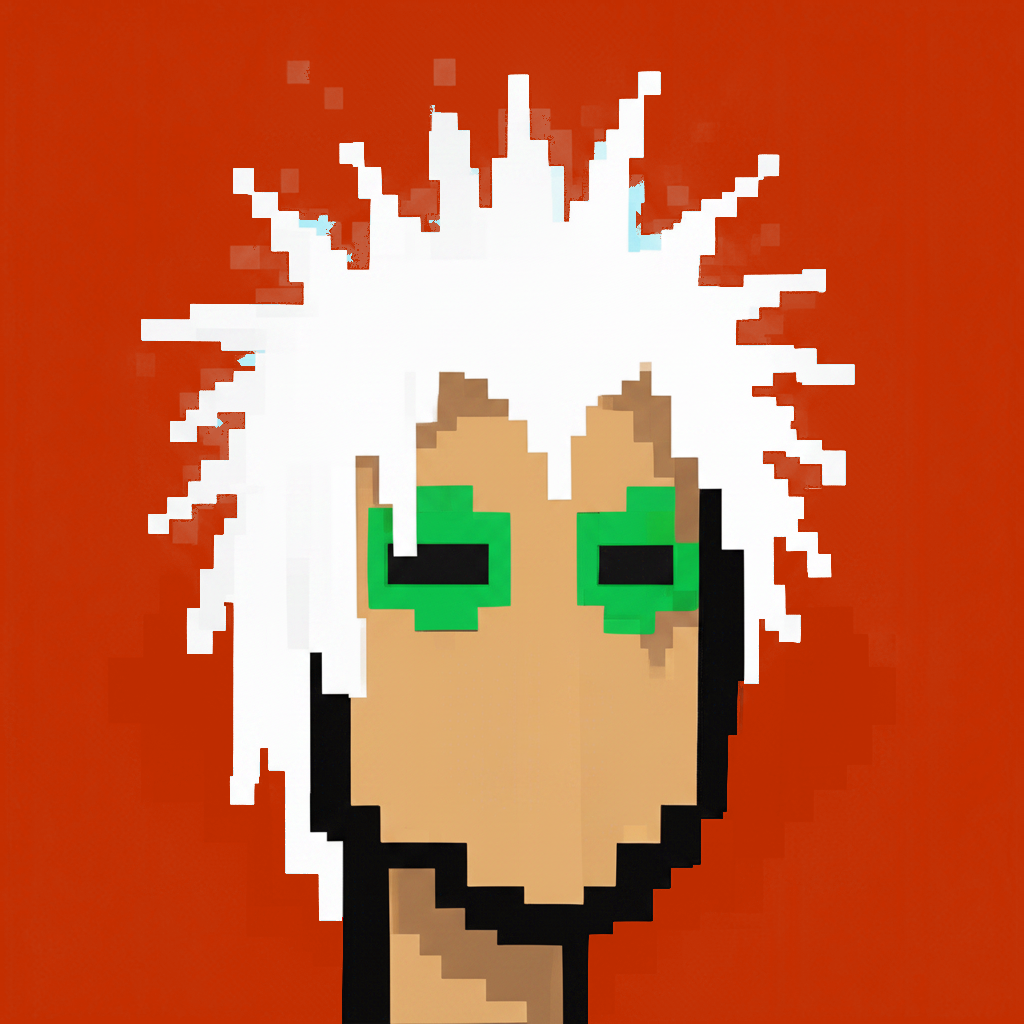
One of a thousand, and the only one with no mouth. Its trait is Silence. Ice in its hair, fire behind it. It cannot be bought on a marketplace, it cannot come out of a mint, and it will never be drawn. It cannot be asked.
Five years to the day after the signature, #998 goes into a contract that nobody owns. Not the people who made it. Not the people who hold the keys. There is one way out, it is written in the code, and the code does not care who you are, how much you have, or how clever you think you are. It only checks.
Every date on this page is a 28th, and only the last one was chosen. The signature: 28.10.2021. The coin: born 28.01.2024, at block 19,101,406. The last word: 28.02.2024. So #998 goes in on 28.10.2026, five years to the day after the signature, on the day of the month the coin was born, and the contract that holds it is born on a 28th too. Some people keep anniversaries. This one keeps three.
The way out goes through three people, three sealed files, three passwords that arrive in the dark, addressed to one wallet, and a table where somebody lights a cigarette. It costs more than it should. Everything you pay becomes a wall under $N that outlives the race and everyone in it: half of the $N each wall catches dies, the other half stays in the pool for good, and nothing ever comes out to anyone. The safe path is to read this and leave. Somebody will take the other one. Somebody always does.
Everything you own, you bought. This one you would have to become.
Two parties win, and only two. The competitor walks away with #998, the one BlurrPunk that was never for sale, and with a story no wallet can buy: three handshakes, three keys, a name in the chain forever. The project gets every wei of the path placed under $N as a wall nobody can ever take back, not the keepers, not the makers, not a vote. Nobody is paid. Nothing is promised. The competitor gets the punk; $N gets the floor. That is the whole deal, in writing, on chain.
Alea iacta est. Someone has to be the one who picks it up.
Three keys. Four keepers. Three cigarettes. Nobody said it was healthy.
Each key is a private key, sealed in a file. Two keepers carry each file and hand it to anyone who sits down with them and signs, with them, that they met: the file comes only after that signature is on chain. It opens nothing on its own. Its password is held by the other two keepers, and arrives on chain only after that handshake, sealed to your wallet so that nobody else can read it. Not the keepers. Not us. Nobody holds both halves of any key. Any one keeper can die, lose a wallet or get robbed, and every key still opens. A chair costs 10 ETH. Keeper IV carries all three files and is always your last meeting, in person: the final. A call only by special arrangement. The others you meet in person or on a video call, their choice. Bring a cigarette. On a call, you both light one on camera. No joke.
| seat | wallet | carries files | holds passwords | |
|---|---|---|---|---|
| I | the first keeper | key I | key II, III | met in person or on a call |
| II | the second keeper | key II | key I, III | met in person or on a call |
| III | the third keeper | key III | key I, II | met in person or on a call |
| IV | the fourth keeper | key I, II, III | none | always the last meetup and the last nod · in person, the final |
A key costs 99.98 ETH. We never touch it. There is no function for it.
The moment you prove a key, your payment becomes a wall under $N: ETH waiting at today's price and at every price below it, all the way down to the heat death of the universe. Sell $N into it and it buys. What it buys, half dies and half stays as depth; what it earns in $N dies too, and its ETH is armed again under the market. All of it stays there after you, us and this website are gone: no take-back and no door, not for the payer, not for the keepers, not for the community, not for a vote. Every wall, live →
Some say the world will end in fire. Under $N it ends twice. The ETH stays, in ice. Every token that touches it burns. Nothing comes back, to anyone.
There is none. Not for you, not for the keepers, not for us.
The chain is the only narrator. It does not take sides.
Who went furthest down.
Nobody has gone down yet. The stairs are cold, and so is the coffee.
Walk it once in the dark before it costs anything.
Walk the whole path once, here, before it costs anything: the ceremony, three chairs, three handshakes, three envelopes, three keys, the keepers' nods or the clock, and the door. Your browser plays all four keepers, keeper IV included, across its own table. The cryptography is the real one.
Do not trust us. That is the design.
The rules fit on a matchbook.
- I#998 sits in a contract with no owner. Nothing takes it out except what is written here. Not us either.
- IIThree keys, four keepers, three meetings, and the last one is always keeper IV. First, two of keepers I, II and III, in person or on a call, one key each. Pay for a chair (10 ETH, a wall under $N like a key's; nobody is paid it), meet, and you both sign that you met. Then they hand you the file. They hand it to anyone who does the same.
- IIIThe password is held by the two keepers who do not carry that file. One of them seals it to your wallet once the handshake is on chain. Lose the wallet, lose the envelope.
- IVProve each key from the same wallet, 99.98 ETH each. Each payment becomes a wall under $N at once, and stays there forever. Nothing comes back to anyone.
- VThe first wallet holding all three keys is the finalist. The race closes. Everyone else keeps their walls and their stories.
- VIKeeper IV is booked only with two keys proven, for the third. In person, the final; a video call only by special arrangement. No third key until keeper IV posts on that meetup. Three keepers of four nod, keeper IV always among them, and #998 leaves the room with you at once. No nod? 30 days after your third key, anyone may send it to you: the handshakes were the keepers' word. Nobody blocks the owner from what they earned.
- VIIA finalist may step aside. The race reopens for everyone else, the walls stay where they are, and the name stays on this page, with respect. Nothing comes back, and that wallet is never finalist again.
- VIIIUntil the first key is paid, three keepers can still brick up the door. After that, never.
- IXA keeper who dies, loses a wallet or gets robbed is replaced by the other three. The old wallet keeps nothing and can never play.
- XOpen to everyone, except anyone who ever sat in a seat. Sharing your progress helps your rivals. That is the game.
- XINo wall has a way out: not for the payer, not for the keepers, not for the community, not for a vote. Every $N the escrow touches dies: the way out.